Candidate Trust & Data Security Survey Results

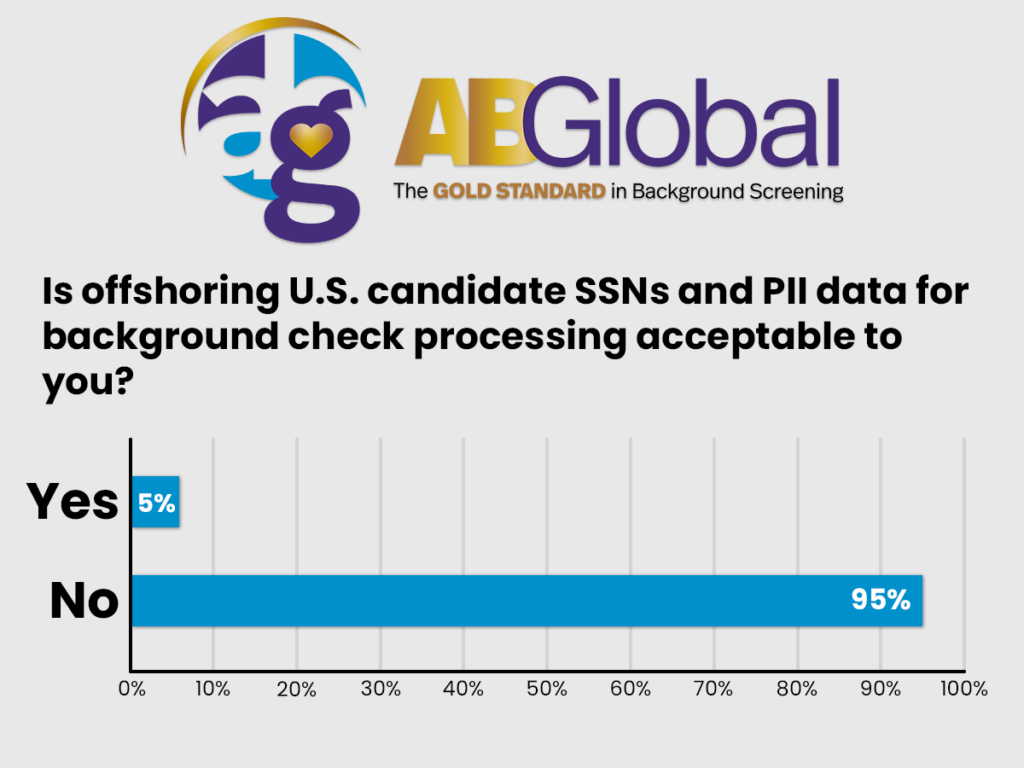
Our recent survey asked job seekers how they feel about having their personally identifiable information (PII) offshored during the background screening process, and the results reveal a clear pattern: candidates value transparency, data security, and trust in the hiring process. A significant majority expressed concern or hesitation when their data might leave the United States, underscoring the importance of keeping candidate information protected and managed responsibly.

Organizations that prioritize secure, U.S.-based data handling not only maintain compliance but also strengthen candidate confidence, improve hiring outcomes, and reinforce their reputation as trustworthy employers in a competitive hiring landscape.

Disclaimer: Percentages have been rounded to the nearest whole number for readability. To request exact figures or additional survey data, please contact Marketing@ABGlobalScreening.com

Picture of Professor Hootsworth

Professor Hootsworth

Professor Hootsworth guides AB Global, ensuring they remain true to their mission of delivering the Gold Standard in background screening. Whether he’s unraveling a tricky screening puzzle or delivering a lecture at Screening University, Hootsworth’s brown feathers and blue eyes have become a symbol of trust, integrity, and knowledge in the background screening world.
Subscribe To Our Blog

More Blog Posts

A background check at the time of hire is a critical first step, but it's only a snapshot. Employees' circumstances can change long after that initial screening, and organizations that rely solely on pre-hire checks can find themselves exposed to risks they never saw coming. That's where post-hire monitoring comes in.
When conducting a background screening, one of the most critical components is identifying an applicant’s AKA, or “Also Known As” name. An AKA can include: Maiden names Nicknames Previous legal names Alternate spellings Aliases that an individual has used throughout their life.
Why is service such a challenge? It is because business leaders often try only to be as good as they think they need to be. The prevailing thought here is that being more than what they need to be is a waste.